The True Savings Thrift Kit
What a thrift haul really saved, counted honestly: only the pieces you would have bought new, the trip and the tailoring, the care label's running cost, whole wears, three clues before a vintage price, and a clean arrival home
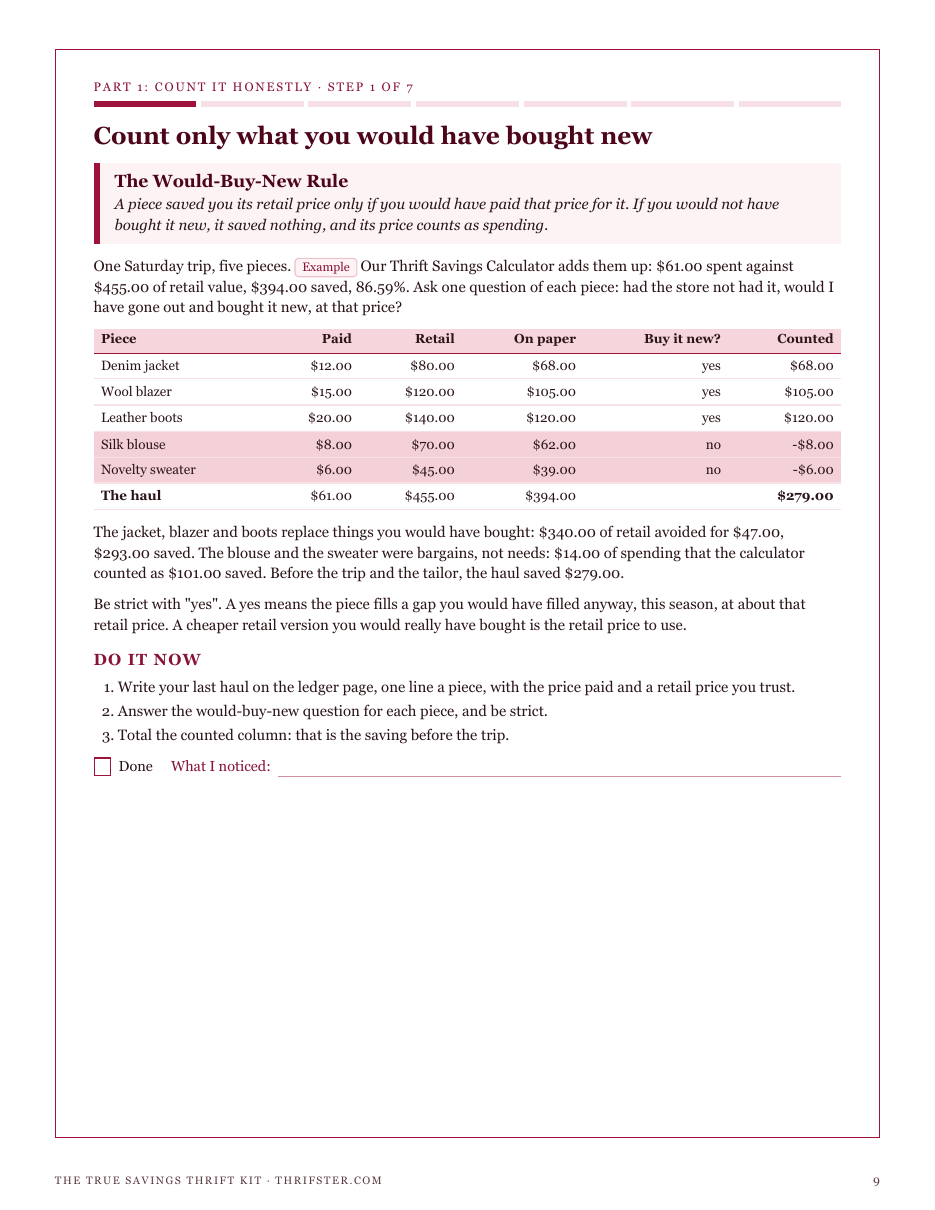
Thrifster's Thrift Savings Calculator does one honest thing: it adds up what a haul cost against what the same pieces cost new. The answer is almost always a big percentage, and it is the number people quote. It leaves out the pieces you would never have bought new, the trip, the tailor and the dry cleaner, and our other tools each answer one question: the Cost Per Wear Calculator divides a price, the Laundry Symbol Decoder reads a label, and the Vintage Era Identifier dates a garment from its clues. This kit puts them in order for one haul. It counts a retail price as avoided only for pieces you would have bought new, charges the haul for its miles and parking with your time on its own line, prices each piece altered and cleaned, counts cost per wear in whole wears, and asks for three agreeing clues on a window of two decades or less before a vintage price. In the worked example, five pieces for $61: the calculator says $394 saved; counted honestly it is $227.60, 57.77% of that, and the $15 blazer costs $136 to own once its sleeves and eight dry cleans are paid. Every figure is computed by the site's own tools, three of which we fixed while writing it (a wash-tub dot count, the year RN numbers began, and a rarely worn piece priced at $0.00 a wear); the worked numbers are examples, and the would-buy-new and vintage price tests are called rules of thumb. Vintage dating is an estimate, never an appraisal or authentication. It includes an arrival routine for bed bugs, a note on vintage fabrics and flame, and a pass list for children's gear. 23 printable pages, plus a personalised sheet worked from the figures in the calculator you arrive from.
Look inside
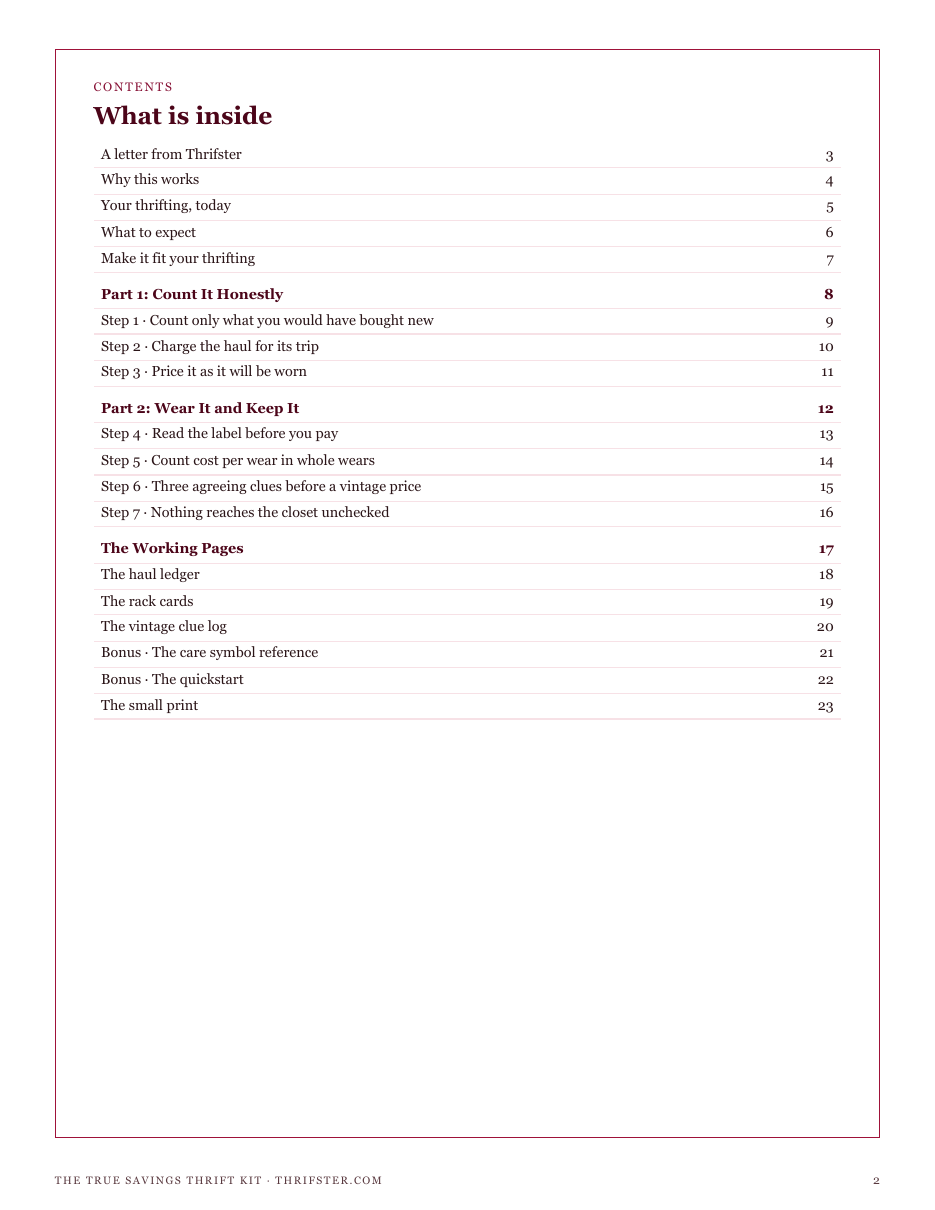
Two full pages from the kit, exactly as printed. Click either to read it at full size before you decide.
What is in it
- The Would-Buy-New Rule: the calculator's saving beside the saving on the pieces you would really have bought
- The Whole Trip Rule: miles and parking off the saving in cash, time on its own line, and the saving per hour
- The Altered Price Rule: tailoring and repairs priced at the rack, and the work to pass on
- The Label Rule: the care symbols read in order, and what a dry-clean-only label costs over two years
- The Whole Wears Rule: cost per wear with tailoring and cleaning, in whole wears only
- The Clue Count Rule: three agreeing clues on two decades or less before a vintage price, never an appraisal
- The Arrival Rule: bag, inspect, clean by the label, heat or cold for a piece in doubt, vintage fabrics and flame, and a children's gear pass list
- The haul ledger, rack cards and the vintage clue log (printable)
- The care symbol reference: ASTM dots and ISO numbers, every symbol in plain words
- The quickstart, and a personalised sheet worked from your own calculator figures
- ✓ 23 printable pages
- ✓ 10 sections, worksheets and templates
- ✓ A second PDF worked out from the numbers you enter
- ✓ No account needed, just an email address
- ✓ Instant download; link valid 7 days
Price includes any taxes. Sold by GrabURL, who handle checkout and support. The charge appears on your statement as GrabURL.
The kit picks up where the free Thrift Savings Calculator leaves off. The calculator adds up retail value against what you paid; the kit counts only the pieces you would have bought new, charges the haul for its trip and its tailoring, prices the care label's running cost with the Laundry Symbol Decoder and the Cost Per Wear Calculator, and asks for three agreeing clues from the Vintage Era Identifier before a vintage price. Dating is an estimate, never an appraisal or authentication, and the worked figures are examples.